
Some game creators leave us characters. Others leave us places: a room we still recognize, a route we still remember, a secret we were certain nobody else had found. Richard “Levelord” Gray belongs among the designers who made those places matter.
Gray, the Duke Nukem 3D level designer and Ritual Entertainment co-founder, has died at 68. Apogee Entertainment announced his passing on October 13, 2026. Former colleague Joe Siegler identified October 12 as the date of his death. This tribute remembers his work and the generosity his peers have described.
Who was Richard “Levelord” Gray?
Richard Gray was an American level designer best known for Duke Nukem 3D, Quake: Scourge of Armagon and SiN. Working as Levelord, he helped make exploration, personality and unexpected spaces central pleasures of the first-person shooter. His career also connected the amateur Doom mapping scene with professional game development.
His name became shorthand for mapmaking that made players curious. There is a lasting tribute in that curiosity: people still return to these games to discover what their spaces can do.
From Doom modder to professional level designer
In his 2016 Duke64Nukem interview, Gray traced his first real mapping experiments to Doom and the DEU editor. He began by altering an existing level, then shared his GrayDOOM maps through CompuServe. Developers noticed. He eventually chose to work on Duke Nukem 3D.
He said he was 35 when he made that first Doom level. That detail offers encouragement without turning his life into a formula: an unconventional route into games can still produce work that lasts. An editor, a small experiment and the willingness to share it gave his creative interests somewhere to go.
Why Duke Nukem 3D's worlds stayed with players
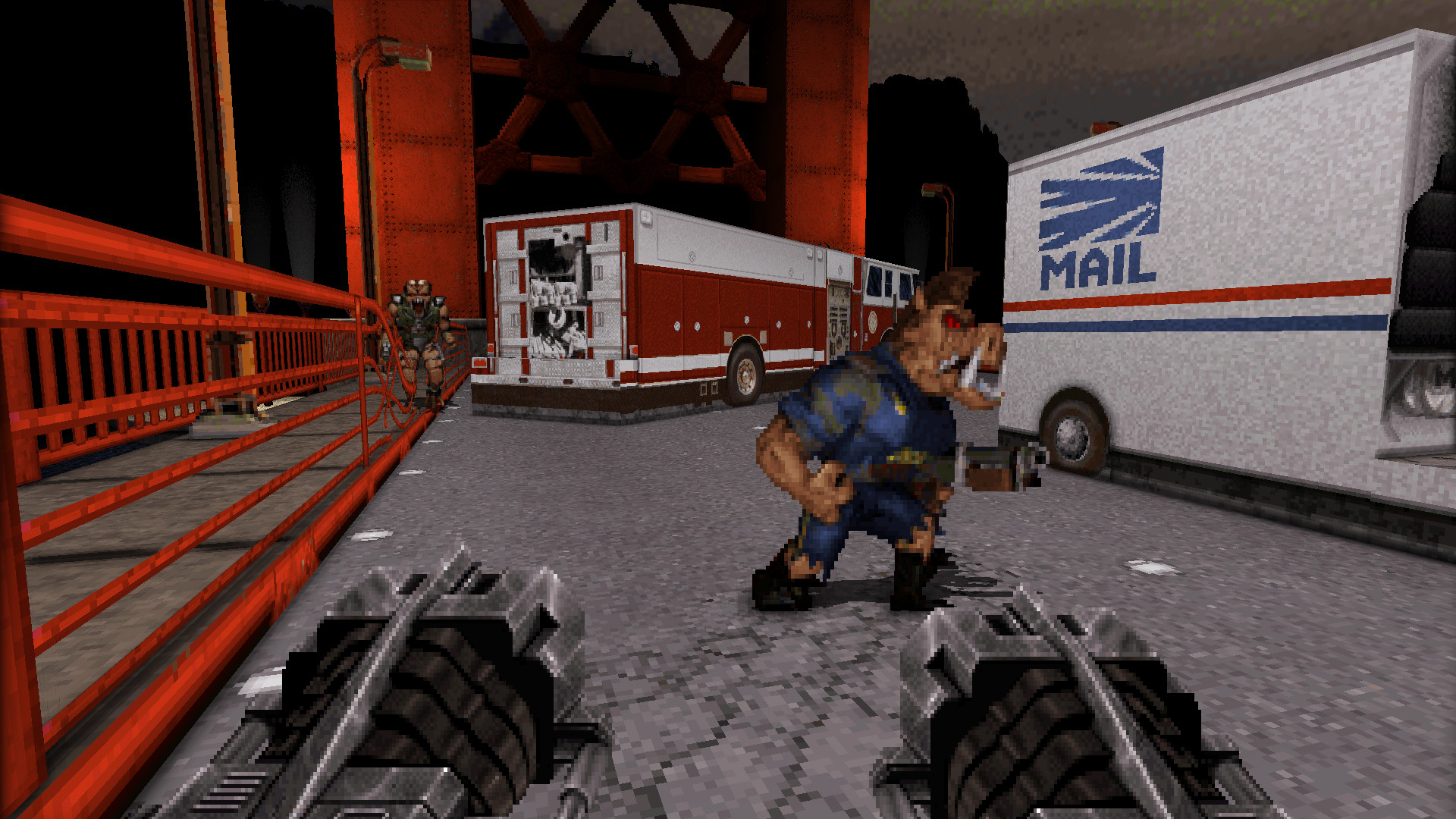
Duke Nukem 3D invites a particular kind of attention. A player looks at a room and wonders what can be opened, what might connect to it and whether the apparent boundary is really the end. The location becomes something to investigate as well as somewhere to fight.
That is the part of Gray's legacy we want to celebrate. Our reading of his work emphasizes the pleasure of becoming familiar with a space, then finding that it has another layer. A memorable level can give a player several stories: how the fight went, how they found their way, and what they discovered when they stopped following the obvious route.
In his tribute to Gray, John Romero singled out Duke Nukem 3D's second and third episodes for their distinctive designs. Recognition from another influential FPS designer helps explain the respect behind the nickname. These were spaces other mapmakers noticed.
“You're not supposed to be here”
Gray's famous hidden message, “You're not supposed to be here,” feels like a conversation between the person building a world and the player probing its edges.
In his 2019 interview with Habr and RUVDS, Gray joked that some people recognized the message before they recognized his name. He also made clear that he did not invent Easter eggs and credited other designers, including Allen Blum, for hiding their own surprises.
That distinction matters. We can celebrate a signature without pretending one person invented an entire tradition. The message endures because it gives the discovery a human voice. Beyond the intended route, someone had anticipated your curiosity and left a greeting.
Quake, SiN and a career beyond one game
Gray's work continued through Quake: Scourge of Armagon and SiN at the studio that became Ritual Entertainment. In his 2021 Strife Streams interview, he recalled how exciting and frightening it was to establish a studio, and how much working on the Quake expansion meant to him.
The same interview discusses The Edge of Oblivion, the suspended-platform deathmatch map for Scourge of Armagon. In 2016, Gray had identified HIPDM1 as a possible favorite among his own maps, remembering the effort it took to convince others that it would work.
The contrast is worth considering: a recognizable location can draw us in, but an unfamiliar arrangement can make us rethink how we move. A designer's personality can live in either approach. The achievement is making the space worth learning.
Remember the collaborators, too
In a joint interview with Cliff Bleszinski for Quarter to Three, Gray observed that level designers sometimes received praise for contributions that belonged to artists and programmers. It was a funny answer with a serious point about credit.
His later recollections of working with Allen Blum carry that same respect. Remembering Gray should also mean remembering the teams around him. A level takes shape through tools, code, art, sound, production and testing. Celebrating its designer is most meaningful when it helps us notice that collaboration.
Gray and Blum returned for the new fifth episode of Duke Nukem 3D: 20th Anniversary World Tour. The publisher's description credits both original episode designers. The official World Tour screenshots accompanying this retrospective illustrate that shared body of work.
What today's indie developers can take from his legacy
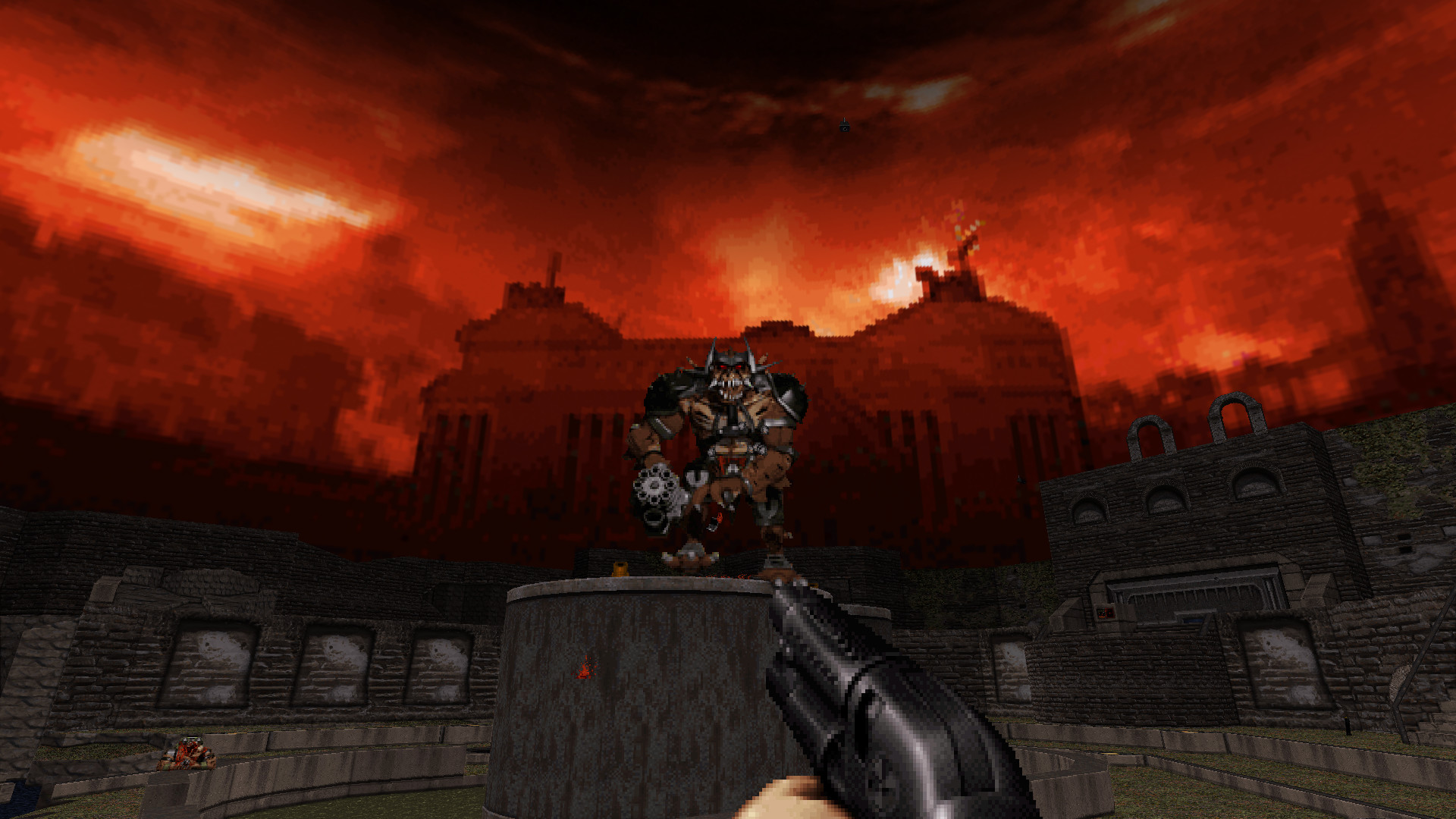
A useful tribute can include an invitation to look closely. Revisit a level and ask what makes you remember it. Is it the view when you enter? The way you recognize a place after returning to it? A surprise that rewards attention? A battle that changes how safe the room feels?
For a small development team, those are practical questions. A distinctive room can be a more manageable creative target than a vast environment. Give it an identity, decide what the player should notice, and watch someone else play it before explaining your intentions. Their experience may reveal something your familiarity hides.
Readers who want to explore those questions through their own experiments can turn to our guide to free tools for 2D maps, FPS levels and game art, alongside our discussion of objective design for indie multiplayer games.
Questions about Levelord's work
What games is Richard “Levelord” Gray best known for?
Duke Nukem 3D, Quake: Scourge of Armagon and SiN are central to his FPS legacy. He also returned with Allen Blum for Duke Nukem 3D: 20th Anniversary World Tour's new episode in 2016.
Was Levelord a Doom developer?
His route into professional level design included making and sharing custom Doom maps. That modding work should not be confused with being a designer of id Software's original Doom campaign.
Did he create Duke Nukem 3D alone?
No. Duke Nukem 3D was a team production. Gray was one of its key level designers, alongside Allen Blum. His work belongs to that shared creative achievement.
Where can I read Levelord's own thoughts about design?
The linked 2016 Duke64Nukem interview, 2019 Habr/RUVDS conversation, 2021 Strife Streams interview and Quarter to Three discussion preserve his explanations, humor and perspective. They offer more than a list of credits.
Hear Levelord in his own words
The 2019 Habr/RUVDS conversation preserves Gray talking about his career and the people he worked with. Read the English interview transcript alongside the original video.
The person behind the places
John Romero's remembrance described Gray as “a gentle soul.” Alongside the admiration for his design, that is a moving way to remember him.
Here at NeonRoof, we are grateful for creators whose work makes players curious about how games are built. Gray gave people places worth exploring, and reasons to look for the person behind them. His name became part of the experience of discovery.
Thank you, Levelord. The places you helped create are still worth returning to.
Photograph, screenshots and reporting notes
Portrait: Richard Gray speaking at Geek Picnic in St Petersburg, June 25, 2017. Photograph by Valentin Kozin / RetroTech Squad, via Wikimedia Commons. The Commons portrait crop and this article's resized/cropped photo versions are available under CC BY-SA 4.0. Photo changes: crop, resize and a title overlay in the social preview. This photo license does not apply to the separate game screenshots or article text.
Game images: official Duke Nukem 3D: 20th Anniversary World Tour screenshots published on the linked Steam page, used here to illustrate discussion of the game. Game artwork belongs to its respective rights holders.
The passing announcement and date attribution are linked above to Apogee and Joe Siegler. This article does not speculate about a cause of death. Design interpretations are NeonRoof's editorial commentary; the linked interviews provide Gray's own account.
We all played his levels. RIP brother