Join players and independent developers in the NeonRoof Discord community to discuss these games, publishing, and practical game-development work.
Why study ETQW when making an indie multiplayer game?
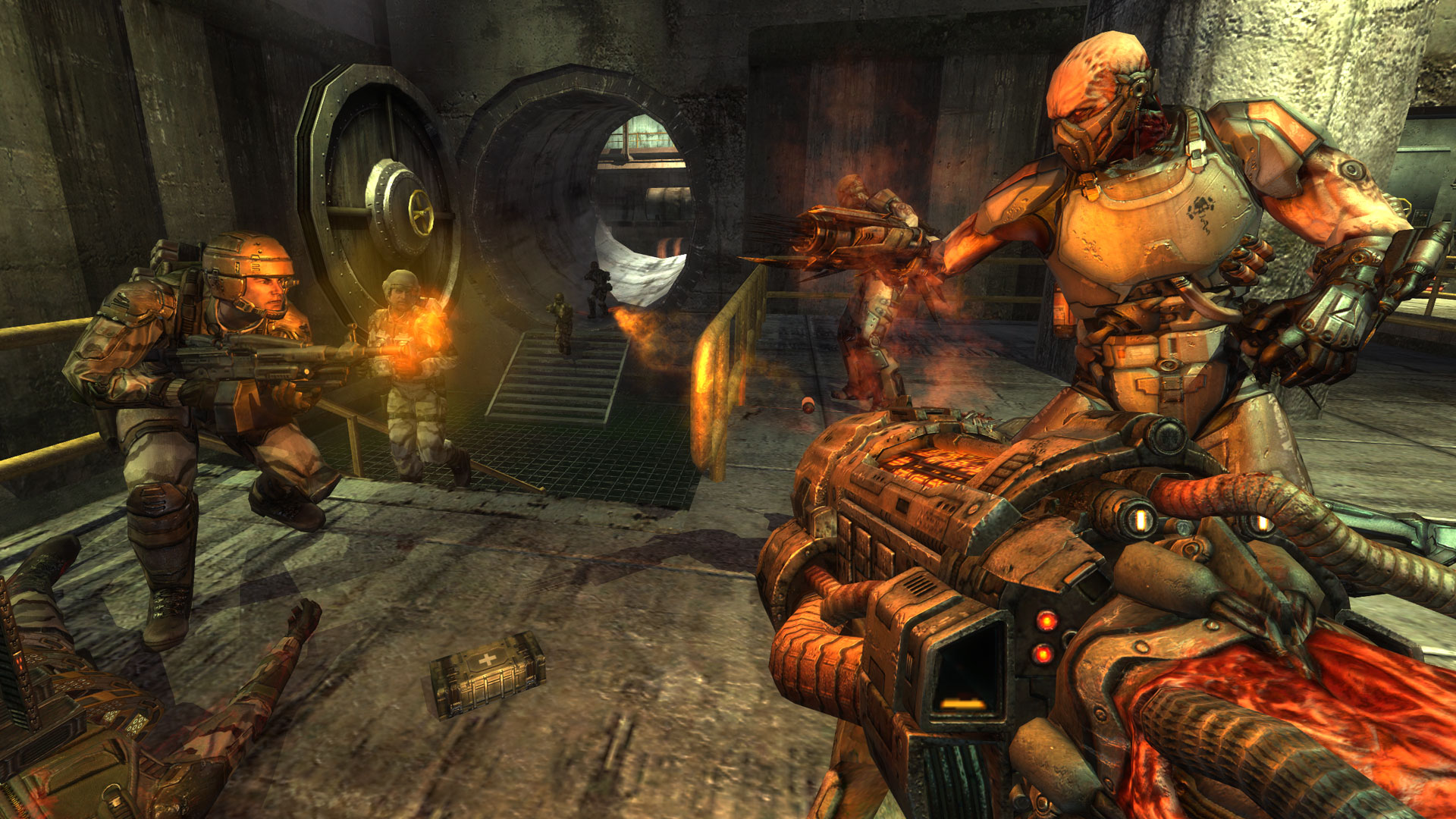
Enemy Territory: Quake Wars is a useful design reference because it makes team contribution visible. Splash Damage's official description identifies five classes, distinct class and mission objectives, vehicles, deployables, and matches with or without human teammates. Those are features of ETQW, not a recipe every small studio must copy. The better question is how a modest game can make cooperation understandable with fewer systems.
Give players a job they can recognize
In a class-based match, a player should know what their role can do, what the team needs next, and whether an action helped. Distinct classes are useful only if objectives create opportunities for each one. For an indie prototype, test two roles and one objective before designing a large roster. Watch whether new players understand the objective without a tutorial wall.
Make the objective more important than the scoreboard
ETQW's official description emphasizes combat objectives and teamwork. A small studio can apply that principle by showing the next team goal, rewarding useful support, and giving clear feedback when a defender, builder, or attacker changes the outcome. It is a design inference from the official description, not a claim that we measured ETQW's retention or conversion.
Keep discovery as clear as the game design
The ETQW client Launcher listing on NeonRoof connects gameplay media, project context, and community links. The ETQW community site provides a separate route to current client information. A game's public page should similarly explain what players actually do, show representative gameplay, identify supported systems, and lead to real support. An indexable page can help people discover a game; it does not guarantee search rankings.
For the player-side details, read our practical ETQW guide and the earlier ETQW objective-shooter editorial. To turn the lesson into a release plan, explore the indie development toolchain from prototype to players and the NeonRoof developer tools hub. Developers who want help building a public game page can use assisted publishing.
This article analyzes a third-party game for educational purposes. Splash Damage and the original rights holders have not endorsed NeonRoof or this editorial. Official imagery remains their property.
Remembering a level-design pioneer
For a historical perspective on the craft, read Remembering Richard “Levelord” Gray, FPS Design Legend. The tribute follows his path from Doom mapping to Duke Nukem 3D, Quake and SiN, with links to his own interviews and reflections on memorable game spaces.
No comments yet. Start the conversation with a useful, on-topic response.