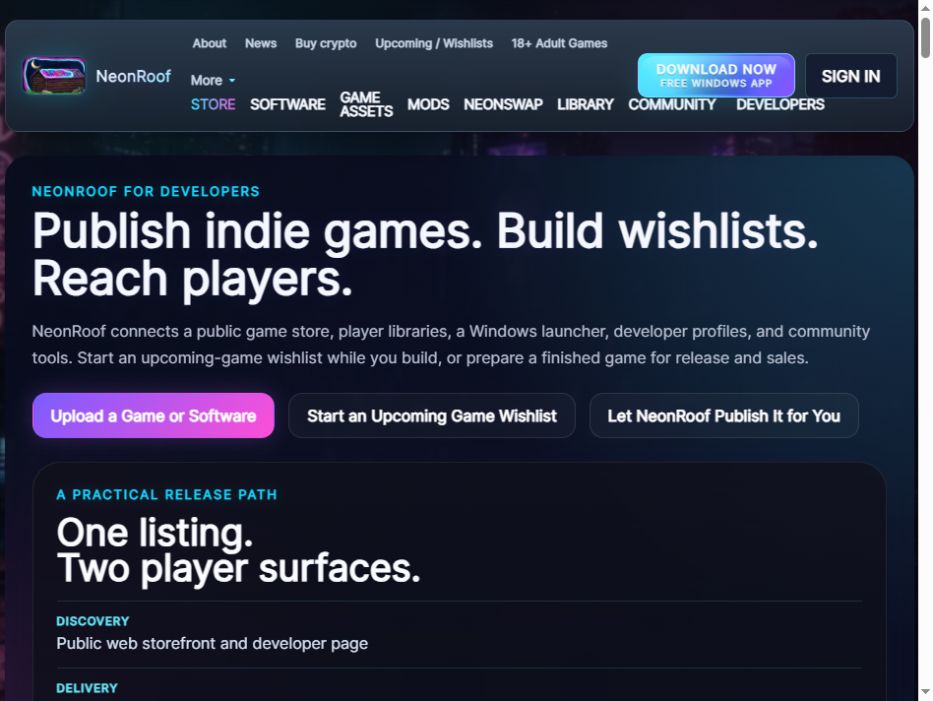
NeonRoof helps indie developers connect the work of making a game with the work of finding players. Free software and asset directories support the build, wishlist pages introduce an upcoming project, and approved releases can reach the web store and Windows catalog. For paid game sales, NeonRoof’s current platform fee is 10%, with payment and other applicable transaction costs accounted for separately.
A useful publishing home should make the next step clear. A developer with screenshots needs a public page. A team preparing a paid release needs delivery, support and payout information. NeonRoof brings those services together so a studio can grow its presence as the game develops.
Start your indie game wishlist · Explore developer publishing · Get assisted publishing help
Start with a wishlist while the game is still in development
The wishlist route is designed for an upcoming game that has something honest to show. It creates a public campaign connected to the game’s store presentation and developer identity. Screenshots, a description, release information and official links give a player enough context to decide whether to follow the project.
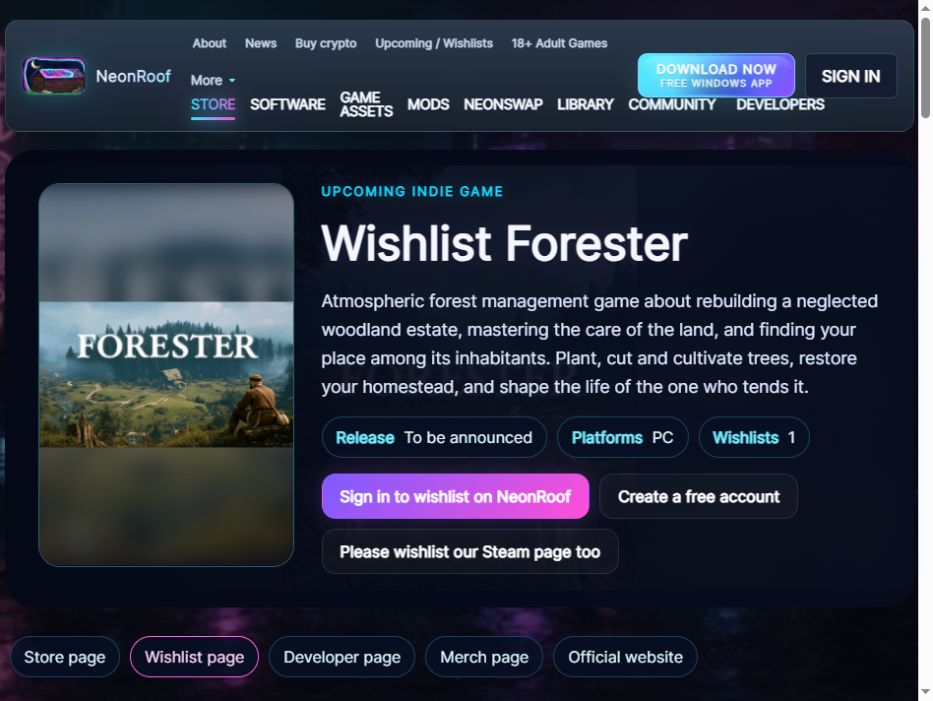
Look at Forester, Blind Man’s Buff and INDUSTERIA for live examples of the format. Their pages show how different games can use artwork, project descriptions, release information and connected coverage. They are examples of the service, not claims that every campaign will produce the same results.
Prepare a short pitch that explains the player’s activity, the setting and the feature that makes the game worth remembering. Use actual screenshots and accurate release information. Add a gameplay video when one exists, and keep official website, Steam or itch.io links current if you use those services too.
The wishlist checklist is a useful preparation step. A focused, complete page gives someone a reason to follow the game and a clear action to take.
Publish the campaign before completing paid-release onboarding
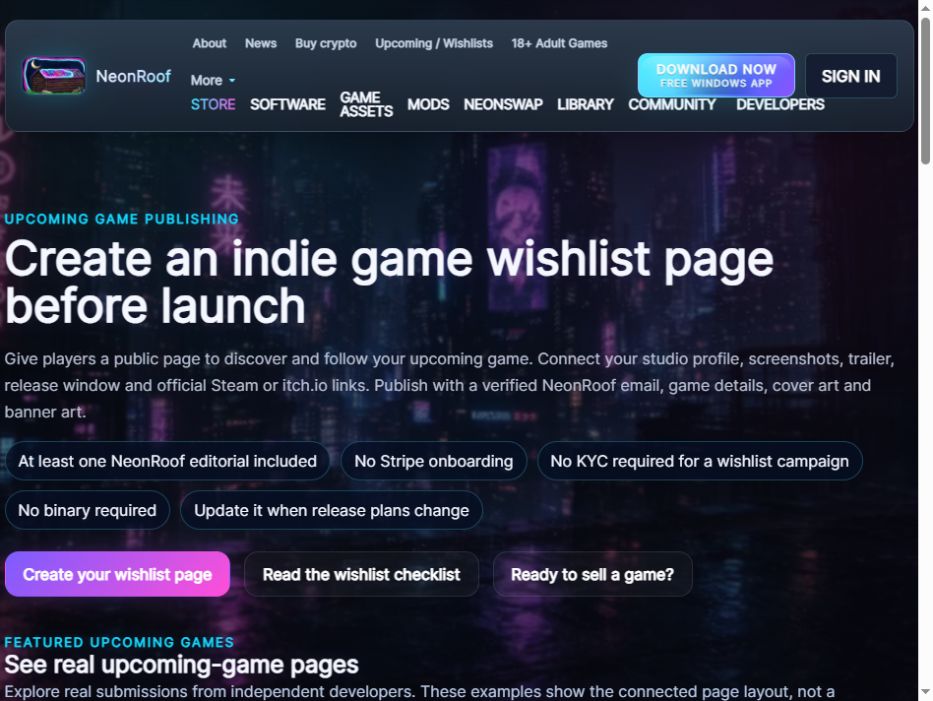
An upcoming-game campaign starts with a verified NeonRoof email and the required game details and artwork. The campaign does not require a finished binary, KYC review or Stripe payout onboarding. Those release and payment requirements belong to the later publishing path.
NeonRoof’s wishlist publishing offer also includes at least one NeonRoof editorial. Supply a useful pitch and genuine media so that coverage can explain the game accurately. A YouTube video is helpful, but its absence does not by itself prevent a game from having a platform presence.
Treat the campaign as a maintained project page. Update the release window when plans change, replace obsolete screenshots and share a meaningful demo or development milestone. Read the assisted publishing materials guide if you would like help preparing the listing.
Understand the 10% platform fee
A small studio needs to know which costs affect a sale. NeonRoof’s published baseline is a 10% platform fee on the transaction amount used to calculate the application fee. On a $20 fee base, that platform fee is $2, leaving $18 before other applicable costs and adjustments.
That example describes the platform fee calculation, not a guaranteed bank payout. Processor charges, taxes, conversion, refunds and other applicable adjustments can affect the amount available to the developer. The publisher terms explain the calculation and payout conditions.
This makes the 10% cut a concrete planning figure. It should be considered alongside the developer’s own production, hosting and support costs. NeonRoof’s publishing overview explains available delivery routes, secure Stripe onboarding and the distinction between an upcoming wishlist campaign and an approved paid release.
Choose a delivery path that suits the game
The website and Windows platform share the published game catalog. Supported releases can use approved direct downloads, browser play or the Windows application’s library and managed installation workflow. The appropriate route depends on the game’s package and approved listing.
Developers can use an approved bucket or delivery API without purchasing NeonRoof’s optional storage plan. Their own provider’s charges remain separate. Optional NeonRoof hosting is also available under the current published plan, so review the hosting and publishing details before selecting a delivery setup.
The free Windows application is available publicly. A developer can start the wishlist and web onboarding process without making players wait for a finished release or asking them to join a testing program simply to obtain the launcher.
Use the free production resources before paying for more software
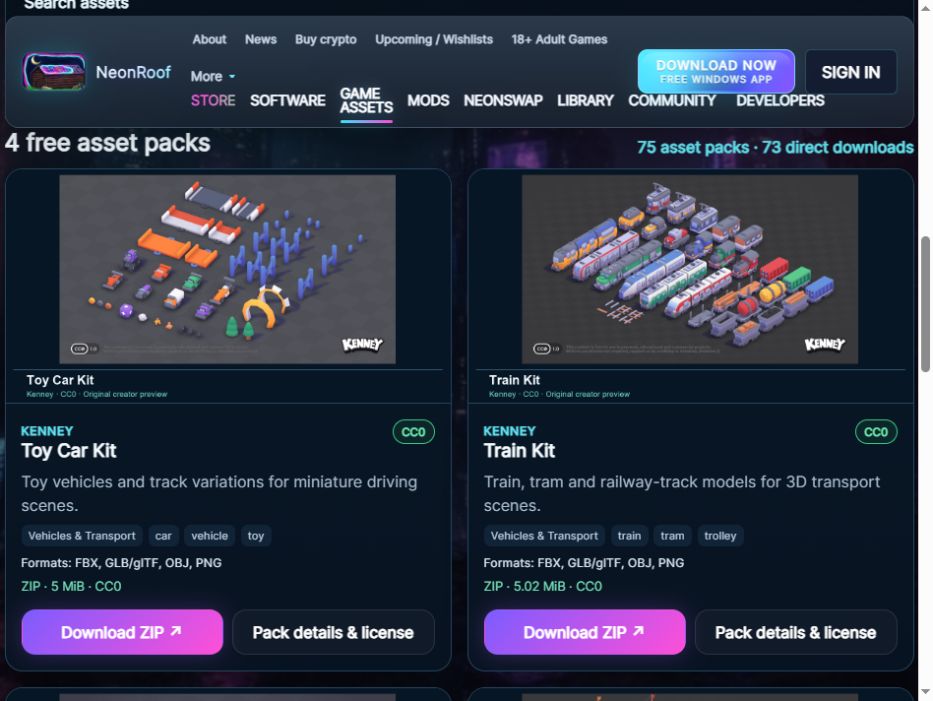
NeonRoof’s developer offering begins before checkout. The game-development directory collects engines, level editors, art applications, materials tools and other production software. The asset library currently contains 75 CC0 packs, with 73 direct-download listings and original previews.
You can start with Godot, build or adjust artwork in Blender and GIMP, then capture a demonstration with OBS Studio. The companion free assets and software guide gives practical pack combinations and import steps.
The point is to make steady progress with a manageable toolchain. A complete small demo, a readable storefront and a maintained wishlist are more useful than installing a large stack that the team cannot sustain.
Give search engines and players a coherent project to understand
NeonRoof connects a game’s public presentation to developer identity, wishlist activity and relevant reporting. Its publishing pages describe canonical game URLs, sitemap coverage, supported structured data and social previews. Those are useful foundations for search discovery and clear sharing.
They do not replace accurate content. Use a consistent game name, an informative opening description, original screenshots and clear platform and release details. Link meaningful development coverage back to the game page so a reader can move from a story to the wishlist or release.
Use the public traffic report and catalog search-visibility report to distinguish website activity from Google impressions and clicks. A public page, a search impression, a wishlist and a sale are different outcomes. Judge progress using the measure that answers your actual question.
Quick answers about publishing on NeonRoof
How much does NeonRoof take from a paid game sale?
The published baseline platform fee is 10% of the transaction amount used for the application fee. Other applicable transaction costs and adjustments may affect the final payout. Read the publisher terms and the commercial details shown during onboarding.
Can I create a wishlist page before the game is finished?
Yes. The upcoming-game route requires a verified NeonRoof email, accurate game details and required artwork. A finished binary, KYC review and Stripe payout setup are not required for the wishlist campaign itself.
What changes when I am ready to sell the game?
A finished release needs the required developer approval, publishing authority, identity review, package and support information. Paid sales also require Stripe payout readiness. Follow the release path in the developer hub.
Does NeonRoof offer help preparing a listing?
Yes. The assisted publishing path accepts game materials for help assembling a listing. The developer remains responsible for the rights, accuracy and support obligations associated with the game.
Will a NeonRoof page guarantee Google rankings or sales?
No. Crawlable pages, clear metadata and relevant coverage support discovery, but they do not guarantee indexing, rankings, wishlists or revenue. Use the available reporting to measure actual results and improve the game’s presentation.
Choose your next step
- Create an upcoming-game wishlist campaign.
- Prepare a finished game for publishing.
- Read the illustrated wishlist and sales guide.
- Build a practical production stack with free assets and tools.
- Explore the complete prototype-to-wishlist software guide.
This is a NeonRoof guide to our own developer services. Workflow, catalog and fee information was checked October 27, 2026. The screenshots show real pages at the time of capture. Source artwork belongs to its credited creators; no AI-generated images or developer endorsements are used.
No comments yet. Start the conversation with a useful, on-topic response.