
How to Market an Indie Game Organically in 2026: A Practical Guide for Developers
Organic marketing is how an independent developer earns attention without depending on a large advertising budget. It is not free in the sense that it takes no work. It costs time, consistency, judgment, and a willingness to listen. The advantage is that every useful page, honest development update, searchable video, playable demo, and healthy community conversation can keep working after the day it was published.
The goal is not to post everywhere. The goal is to create a clear path from discovery to trust to action. A player should be able to encounter one useful or interesting piece of your work, understand the game quickly, verify that it is real, and choose a next step such as following the project, joining the community, trying a demo, or adding the game to a wishlist.
This guide shows how to build that path with a small team. It focuses on repeatable work, not viral tricks, purchased followers, or promises that an algorithm will rescue an unclear product.
Start with positioning, not a posting calendar
Marketing becomes much easier when you can answer three questions in plain language:
- Who is most likely to care about this game?
- What experience or feeling does it deliver better or differently?
- What can a player see in five seconds that proves the promise?
"A roguelike with crafting" is a category description. "Build a fragile airship from scavenged parts and keep it flying through storms" gives a potential player an action, a risk, and an image. The second version produces better store copy, trailer openings, screenshots, post ideas, and creator pitches because it gives the project a recognizable center.
Write a one-sentence promise, a fifty-word description, and a two-paragraph description. Make sure each version describes the same game. These become the source material for your store pages, social profiles, press kit, video descriptions, and outreach. If every channel describes a different project, attention will not compound.
Before planning content, define two or three player groups using behavior rather than demographics. For example: players who enjoy optimizing difficult systems, friends looking for a cooperative game they can understand quickly, or horror fans who value atmosphere over combat. This helps you decide what evidence each group needs.
Build one home base that you control
Social posts are rented distribution. Your durable assets are the pages and lists you can maintain: an official website, a public developer profile, storefronts, a mailing list, a press kit, and a community destination.
Choose one canonical page for the game and keep its name, premise, screenshots, release status, platforms, developer identity, and primary call to action current. Link to it from every profile. That page should answer the questions a new visitor will ask before requiring a sign-in.
Google's guidance emphasizes clear, useful, people-first content. Write for a player or developer who genuinely needs the information, use descriptive page titles and headings, place relevant images near the text they explain, and connect related pages with meaningful internal links. Keyword repetition cannot compensate for a page that fails to answer the visitor's question.
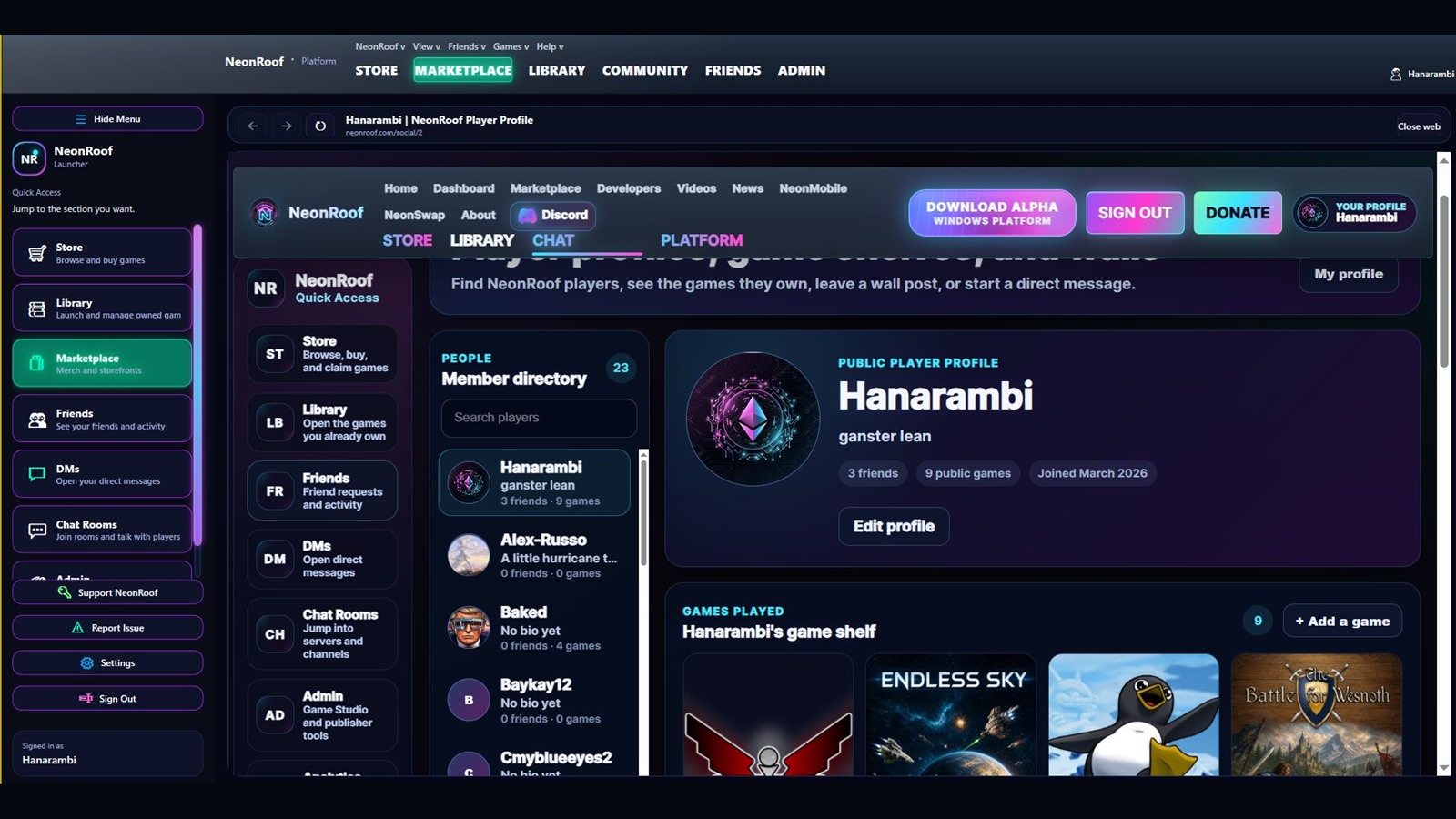
NeonRoof can add another durable surface to this system. A developer can start with NeonRoof's publishing overview, complete developer onboarding, and build a public store presence connected to the broader developer and news ecosystem. Teams that encounter a technical problem can use publishing help, while developers who want hands-on assistance can review NeonRoof's assisted publishing option.
Do not treat any one storefront as the entire audience. Give players a clear choice of legitimate destinations, then keep the facts and visual identity consistent across them. The editorial on where indie developers should publish PC games explains why a wider, manageable footprint can reduce dependence on one discovery system.
Turn player questions into searchable content
Searchable content begins with a real question, not a pile of broad keywords. List what players ask in comments, demos, support messages, community rooms, and playtests. Group those questions by intent:
- Discovery: What kind of game is this, and why might I care?
- Evaluation: How does combat, building, progression, cooperation, or accessibility work?
- Compatibility: Will it run on my hardware, controller, operating system, or handheld?
- Trust: Who is making it, how far along is development, and is the footage representative?
- Action: Where can I try it, follow it, wishlist it, or buy it?
Create one strong page or video for each useful question. A detailed accessibility overview, controller setup page, demo guide, development retrospective, or explanation of a distinctive system can attract a more qualified visitor than a generic "check out our indie game" post.
Use the terms players naturally use, but keep the writing human. The page title should accurately describe the answer. The introduction should answer the main question quickly. Headings should let a reader scan the page. Screenshots should show the feature under discussion and include descriptive alternative text. Link to the store or demo only where it is a natural next step.
Think in clusters. A central game page can link to supporting pages about the demo, system requirements, accessibility, development story, release plan, and major updates. Those pages should link back to the central page and to each other when useful. This helps people move through the story of the project and gives search engines clearer context. NeonRoof's guide to indie game SEO and a broader search footprint develops this strategy further.
Make development content prove the game
A devlog works when it helps the audience understand a decision, see meaningful progress, or learn something from the process. A list of internal tasks is rarely compelling on its own.
Use a simple structure:
- Start with the player-facing problem.
- Show the old behavior or constraint.
- Explain the decision in accessible language.
- Demonstrate the new result.
- Invite a focused response.
One mechanic can produce several useful assets: a longer explanation for the website, a two-minute narrated video, a short before-and-after clip, a still image with a clear caption, and a community question. This is repackaging, not duplication, because each format serves a different viewing context.
Capture clean footage as part of development instead of waiting for launch week. Keep a folder of approved screenshots, clips, logos, team biographies, and factual descriptions. The companion guide, How to Make an Indie Game Press Kit Journalists Can Actually Use, turns that material into a reliable resource for writers and creators.
Use video for clarity, not only spectacle
Video lets a player verify movement, pacing, interface quality, tone, and moment-to-moment play. The first seconds should deliver what the title and thumbnail promised. Avoid a long logo sequence before showing the reason to watch.
For searchable videos, use a concise, accurate title that places the important idea early. Write a description that identifies the game, the demonstrated feature, the development status, and the legitimate next destination. Create a readable thumbnail that shows one idea at small sizes. YouTube's own guidance says that title, thumbnail, and description are more important discovery metadata than tags, and that viewer appeal, engagement, and satisfaction matter.
A sustainable small-team video plan might include:
- One substantial development update each month.
- One short demonstration each week.
- Short clips extracted from genuine milestones.
- A refreshed trailer when the game changes materially.
- An occasional developer Q&A or guided demo.
Measure whether people choose to watch, remain through the opening, and take the intended next step. A smaller video that sends interested players to a demo can be more valuable than a broad clip that produces no lasting relationship.
Participate in communities before asking for attention
Organic community marketing is built on relevance and reciprocity. Read each community's rules. Learn what its members discuss. Answer questions where you have real experience. Share lessons that remain valuable even if nobody clicks a store link.
When promotion is permitted, introduce the project with context. Explain why it fits that community, identify what is available now, and ask a specific question. Do not disguise promotion, mass-post the same message, or ask friends to manufacture engagement. Those tactics weaken trust and can get the project removed from the places where its best audience gathers.
Your own community also needs a reason to stay between announcements. Share decisions in progress, testing opportunities, patch explanations, behind-the-scenes material, and credit for useful feedback. Moderate consistently and publish simple expectations. A small community where members feel heard is a distribution network because its members understand the project well enough to explain it accurately to others.
NeonRoof's community layer, developer pages, store presence, and editorial opportunities are designed to give independent teams more connected places to be discovered. The point is not to replace the community a developer already owns. It is to add credible paths back to the project and make participation easier for players already using NeonRoof.
Use a demo as both evidence and research
A good demo gives marketing something concrete to promise. It also reveals where the promise breaks. Watch where players stop, what they misunderstand, what they repeat voluntarily, and how they describe the experience in their own words.
Build the demo around a complete slice, not an arbitrary amount of playtime. Make the core action visible quickly, preserve enough depth to create curiosity, and end with a clear next step. Test installation, first launch, input, performance, save behavior, and uninstall flow on clean machines.
Events can concentrate attention, but the calendar should serve the readiness of the project. Steam describes Next Fest as a way for upcoming games with playable demos to gather feedback and build an audience, and a title may participate in only one Next Fest. Choose a moment when the demo and store page can convert attention, not simply the earliest eligible date.
Gather permission before using player quotes, videos, or identifying information. Summarize recurring feedback publicly, explain which changes you are making, and avoid promising every request. Closing that loop turns testing into a visible development practice.
Give every post one sensible next step
Organic reach is wasted when a player cannot tell what to do next. Choose the call to action that matches the project's stage:
- Early development: follow development or join the mailing list.
- Public store page: wishlist or follow.
- Playable build: download the demo and submit focused feedback.
- Release period: buy, claim, or share with a friend who fits the audience.
- Post-launch: read the update, return to play, review honestly, or join an event.
Steam's wishlist documentation recommends publishing a Coming Soon page when the team is ready so interested players have a durable action. Wishlists can notify eligible players when a game launches or receives a qualifying discount. They are useful, but the count should not become the only measure of a healthy audience.
Link directly to the promised destination. Avoid a maze of generic profile links when a post is about a demo or a specific update. Test every link on mobile and while signed out.
Pitch creators and journalists as people, not traffic sources
Research before contacting anyone. A useful pitch demonstrates that you understand the recipient's audience and work. It should contain the relevant hook, current status, release timing, access details, a press-kit link, and one clear request.
Keep the first message short. Do not attach a large archive without permission. Do not claim that a game is perfect for a channel simply because the channel covers games. Mention the specific series, mechanic, genre interest, or editorial theme that makes the match credible.
NeonRoof provides a separate Submit Your Game for NeonRoof News route for editorial consideration. Coverage is different from publishing, and submission should never be presented as guaranteed coverage. A useful story angle, accurate materials, and working access make an editor's decision easier.
For the full release sequence surrounding outreach, use the complete 90-day indie game launch checklist. Organic marketing works best when outreach, store readiness, testing, and post-launch support are planned together.
Measure movement through the path
Followers and impressions are context, not business outcomes. Define a small funnel:
- Discovery: qualified people view a page, post, or video.
- Interest: they continue watching, read another page, or visit the store.
- Intent: they follow, join, subscribe, wishlist, or download a demo.
- Experience: they install, play, and reach a meaningful point.
- Advocacy: they return, review, share, create content, or help another player.
Record a weekly baseline. Track the source of meaningful visits with privacy-respecting analytics and clearly named campaign links. Compare content by the action it was intended to produce. A technical guide may earn steady search visits for months; a short clip may generate rapid awareness; a demo update may produce fewer views but more installs.
Ask what changed before drawing conclusions. A different thumbnail, stronger opening, festival placement, major patch, outside mention, or platform outage can alter the numbers. Keep a decision log so the team learns instead of reacting to every daily fluctuation.
A repeatable 30-day organic marketing cycle
Week 1: Listen and prepare
- Review search queries, community questions, support issues, and demo feedback.
- Choose one player problem or project milestone as the month's theme.
- Update the canonical game facts, screenshots, store copy, and press kit.
- Define one primary action and the measurement that represents it.
Week 2: Publish the durable piece
- Create one complete article, devlog, or video that answers the theme well.
- Add accurate headings, captions, alternative text, and internal links.
- Connect it to the game page, store destination, and relevant supporting pages.
- Share it first with the community members most likely to find it useful.
Week 3: Demonstrate and discuss
- Adapt the durable piece into short clips, images, and focused questions.
- Participate in relevant discussions without forcing a link into every reply.
- Offer a demo or testing opportunity when the build is ready.
- Record the language players use when they understand the feature.
Week 4: Learn and improve
- Compare discovery, store visits, follows, wishlists, demo installs, and feedback.
- Improve the weakest transition in the path.
- Update the original page if new evidence makes it more useful.
- Choose the next month's theme from what players actually asked.
This schedule can shrink to one durable piece and two supporting posts per month. Consistency matters more than volume. A developer who can sustain the process for a year has an advantage over a team that exhausts itself during a two-week launch sprint.
How NeonRoof supports organic discovery
NeonRoof is most useful when it becomes part of the developer's connected publishing system. A game can gain a public storefront, a developer identity, community routes, social-preview metadata, and internal connections to relevant developer resources. That creates more legitimate ways for players, search engines, and editorial readers to understand where the project came from and where to go next.
Developers should still maintain their own website, mailing list, press kit, community relationships, and other appropriate storefronts. NeonRoof adds another discoverable surface and a route into an indie-focused PC gaming community. The strategy article on adding NeonRoof to an indie launch plan explains that role in more detail, while the guide to promoting an indie game without a large budget offers additional outreach ideas.
When the project is ready, create a NeonRoof developer account. Prepare truthful store information, properly licensed art, a working build or official distribution URL, contact details, and payout information. If the normal workflow becomes a barrier, ask for publishing help instead of abandoning the submission.
The organic marketing standard
Before publishing any marketing asset, ask:
- Does this help the intended player understand or evaluate the game?
- Is the footage current and the claim accurate?
- Is the developer identity clear?
- Is there one appropriate next action?
- Can the destination be used on mobile and while signed out?
- Does this contribute to a durable page, relationship, or body of knowledge?
- Can the team repeat this quality without burning out?
Organic marketing is not a refusal to spend money. It is the foundation that makes every future opportunity more effective. Clear positioning improves the store page. Searchable explanations keep earning qualified discovery. Honest development content builds trust. A playable demo creates evidence. A useful press kit removes friction. Community participation creates relationships that cannot be purchased by an impression counter.
Build those assets deliberately, connect them, measure the journey, and improve one weak link at a time. That is how a small independent team turns steady work into an audience.
No comments yet. Start the conversation with a useful, on-topic response.